On this page7 sections
A designer once told me her contact form was working beautifully. Inquiries kept arriving. The problem was that almost none of them fit. Couples with a $40,000 budget asking about a full whole-home remodel. People who wanted a single room styled and expected custom-home levels of attention. Every week she was writing kind rejection emails instead of designing. That is not a lead problem. That is a qualification problem, and the website was causing it.
Volume is the wrong metric for a premium studio. The right metric is fit. When your site is clear about who you serve, how you work, and what a project actually involves, it does two jobs at once: it pulls the right people closer and lets the wrong ones quietly excuse themselves. If you want the foundation behind that clarity, start with strong website conversion for interior designers and build the qualifying layer on top of it. That is the real work behind website conversion for interior designers.
The Real Cost of a Site That Attracts Everyone
A website that speaks to everyone ends up qualifying no one. When your homepage says "we create beautiful spaces" and nothing more, a $15,000 furnishing request and a $900,000 new construction project both feel invited. You then spend your week sorting, replying, and declining instead of designing for the clients you actually want.
There is a quieter cost too. Every misfit inquiry trains you to dread your own inbox. The fix is not fewer words about your talent. It is more words about your fit. A studio that names its ideal project type, scope, and investment range filters before the form is ever submitted. This is closely tied to why beautiful interior design websites still fail to bring high-value clients: the work is stunning, but the page never tells Google, AI, or the visitor who it is truly for.
Be Specific About Who You Serve
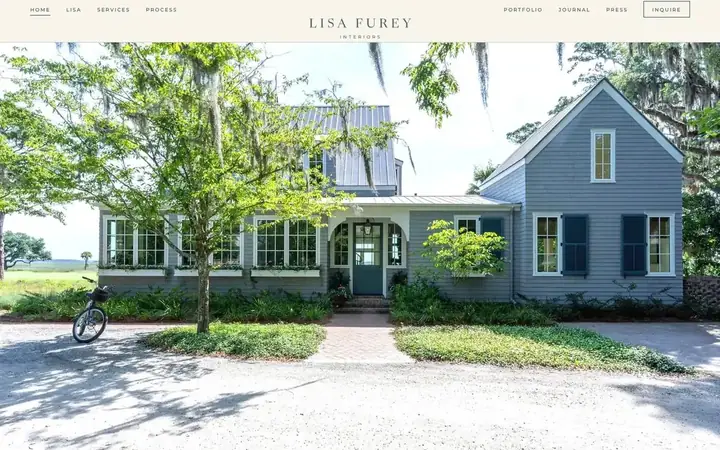
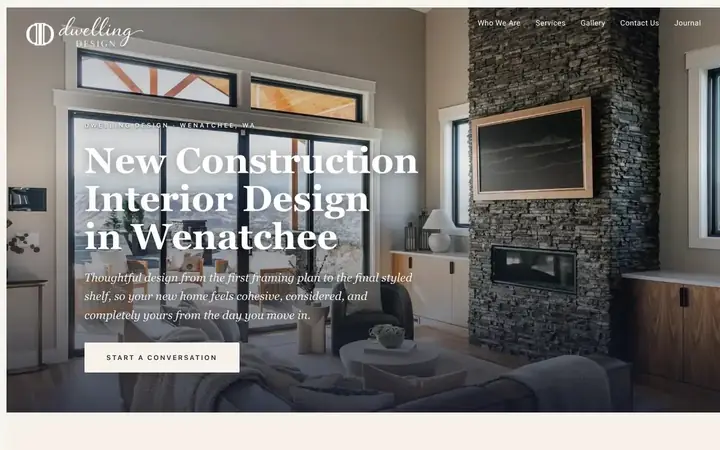
Specificity is the most underused qualifying tool you have. The instinct is to stay broad so you never turn business away. But broad language attracts broad inquiries, and broad inquiries are where mismatches live. A line like "We partner with homeowners building custom lake and coastal homes who want a single design team from architecture through final styling" does more filtering than any form field.
Clarity also helps machines. High-value clients increasingly search by what they are building, not by your studio name. Naming your scope helps you show up for the right queries, which is the heart of why high-value clients search by project type, not studio name. Make the right reader feel recognized:
- Name the project types you take: kitchen and bath renovation, whole-home remodels, new construction, luxury residential.
- State the relationship you want: full-service, design-build partnership, or styling and furnishing only.
- Name the regions you serve, so someone two states away does not assume you travel.
- Be honest about scale, so a small powder-room request self-selects out before it reaches you.
Let Your Service Pages Do the Sorting
A portfolio shows that you can. A service page explains what working with you involves, and that is what qualifies. When a client lands on a page that walks through your process, your typical timeline, and the level of investment a full-service remodel requires, they are deciding for themselves whether they belong. The unprepared leave. The right ones arrive already half-sold.
This is why interior designers need service pages, not just a portfolio. Each page should match a real way someone searches and hires, whether that is a full-service or focused renovation engagement. Structured pages also make you legible to AI tools, which lean on clear, specific language to decide who to recommend, the same logic behind what AI tools need to know before they recommend an interior designer.
Set Expectations Before the Inquiry, Not After
Most qualification happens in the awkward first call, where you discover the budget is off or the scope was never realistic. Move that conversation onto the page instead. Stating a starting investment range, a typical project length, or a minimum engagement is not exclusionary. It is respectful. It saves the wrong client a disappointing call and saves you an hour you will never get back.
The goal of your website is not to get more people to contact you. It is to get the right people to contact you already understanding how you work and what it costs.
Trust is the other half of this. Clients who fit still want proof before they reach out, which is why it helps to build trust before a client ever contacts you and to remember that high-end clients compare you before they inquire. Expectations and trust together do the qualifying work.
Use Proof to Qualify, Not Just to Impress
Most studios treat case studies as a highlight reel. The better-fit ones use them as a quiet filter. A case study that names the project type, the scope of work, the rough timeline, and the kind of decisions the client had to make tells a reader far more than a glossy after photo. The right prospect sees their own renovation in it and thinks, "this is exactly the team for me." The wrong one realizes the project is bigger than they imagined and steps back, which is the friendly outcome you want.
Detailed proof is one of the most reliable qualifying tools you can build, which is the whole argument for how interior designers can use case studies to win better clients. The same is true for your gallery: a portfolio that explains the brief behind each project, not just the result, does more sorting than a wall of images, which is why portfolio pages need more than pretty photos. When proof carries context, it qualifies and persuades at the same time.
Make the Contact Step Match Your Standards
A generic "Name, Email, Message" form invites generic inquiries. A thoughtful intake form qualifies. Asking about project type, location, timeline, and rough scope filters out the unserious and gives you everything you need to respond to the serious ones well. The few extra fields cost you a handful of low-fit submissions and earn you better conversations.
The contact experience is often where good clients silently slip away, which is the whole point of why your contact page may be costing you better clients. From complete structuring to visibility, the inquiry step should feel like the natural close of a confident, specific website, not a generic afterthought bolted to the end.
Qualifying and Visibility Are the Same Foundation
Here is the part most studios miss: the clarity that qualifies clients is the same clarity that makes you visible. When your site clearly states who you serve, what you build, and where you work, Google and AI tools understand you better and surface you for the right searches. Fit and findability come from one structured foundation, not two separate projects.
If your current site is beautiful but vague, that is usually where to start. A clear-eyed look at structure and language often reveals exactly why misfit leads keep arriving and the right ones do not, which is the case for a Google and AI visibility audit. Build the foundation once, and it works on both sides of the funnel at the same time.
Next step
Make your studio easier to find
When the right clients search, clarity is what brings them to you. Let us look at the structure behind how you are found.
Request a Studio Review
Website redesign, Google SEO, Google Business Profile and AI search visibility, trusted by more than 100 interior design studios, architects and contractors across the United States.
 5-star Google reviews