On this page6 sections
A boutique studio in Scottsdale runs a beautiful Instagram campaign. The reel of a desert-modern whole-home remodel gets thousands of views, a wave of saves, and a handful of DMs. Three weeks later, almost none of it has turned into a real project. The work was stunning. The ad did its job. So where did the clients go?
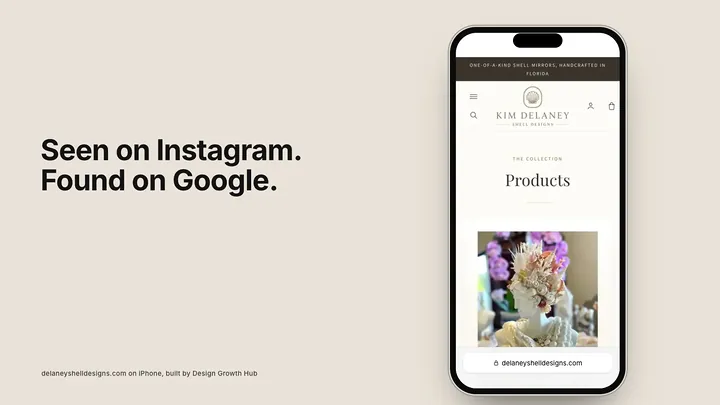
They went to Google. After the scroll-stopping moment, a serious homeowner does not message a studio they have never heard of. They search the name, the city, the project type. And if Google and AI cannot confirm who that studio is or what it does, the interest evaporates. This is the quiet gap between paid social and search, and closing it is exactly what a visibility foundation for interior design studios is built to do.
Instagram creates demand. Google decides whether it survives.
Instagram is a discovery engine. It is unmatched for putting a kitchen and bath renovation or a coastal new build in front of someone who was not looking for a designer that morning. But discovery is not the same as decision. The platform sparks desire; it rarely closes it.
The moment a viewer feels that spark, their behavior shifts. They leave the feed and verify. They type your studio name. They search "luxury interior designer" plus their town. They ask an AI assistant who handles full-home remodels nearby. If those searches return a thin, confusing, or absent result, the ad money you spent generating attention has nowhere to land. We unpack this handoff in more detail in why Instagram alone is not enough anymore.
The leak happens in the gap between platforms
Most studios treat Instagram and Google as separate departments with separate budgets. That separation is where money disappears. A campaign drives a spike in branded searches, and the website is not structured to confirm anything Google or an AI tool needs to recommend you.
Watch what a qualified homeowner actually does after seeing your ad:
- They search your studio name to check that you are real and established.
- They look for service pages that match their project, not just a gallery.
- They scan your Google Business Profile and reviews for proof.
- They may ask an AI assistant to compare you against two other studios.
If any of those steps comes back empty, the lead is lost in silence. You never see it in your ad dashboard. This is the same structural problem behind why ads fail when the website foundation is weak.
Make your visibility foundation ready before you scale spend
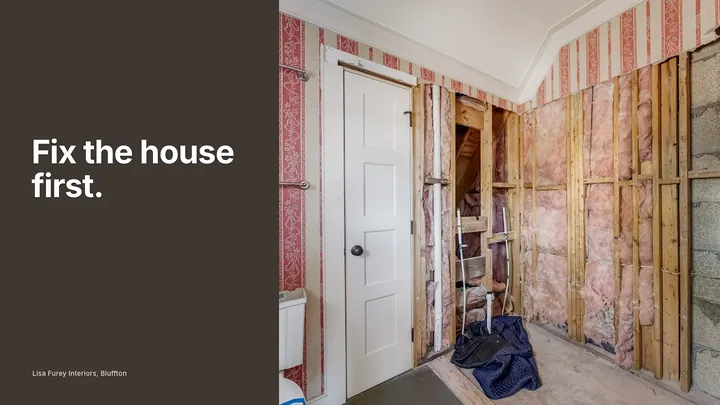
Running more ad budget against a weak foundation does not fix the leak. It widens it. Before scaling a campaign, the studio behind the ad has to be legible to both search engines and AI tools.
Paid social buys you the moment of interest. Your visibility foundation is what turns that moment into a booked consultation.
That means real service pages for kitchen and bath, whole-home, and new construction work, written so a machine can understand them. It means a complete Google Business Profile, structured project descriptions, and an About page that establishes who you are. We cover the groundwork in what to fix before running ads and why you need service pages, not just a portfolio.
A worked example: the same remodel, two channels
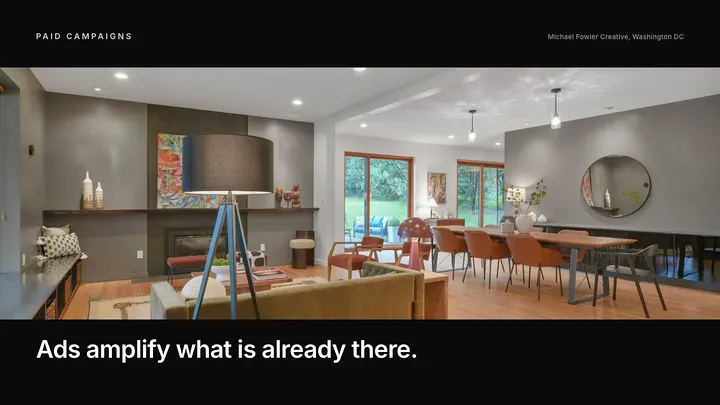
Picture a coastal whole-home remodel you just photographed. On Instagram, it becomes a thirty-second reel of the before-and-after kitchen, a carousel of the primary suite, and a story walkthrough of the millwork. That content does one job well: it interrupts the scroll and plants a thought in someone who was not shopping for a designer.
The same project should also be working quietly inside Google and AI tools, where it does a different job entirely:
- A written project description that names the location, the scope, and the materials, so a search engine and an AI assistant can understand what kind of studio you are.
- A service page for whole-home remodels that this project links to as proof of capability.
- A line in your About page or press section that ties the work to your studio's track record.
- Reviews from that client that mention the project type and the experience of working with you.
The reel reaches people for a day or two. The structured version of the same project keeps answering questions for months, long after the ad budget for that campaign is spent. That is how one remodel earns its keep twice. We go deeper on this in how project descriptions help AI recommend your studio.
How the two channels actually reinforce each other
When the foundation is in place, Instagram and Google stop competing and start compounding. Each one makes the other more effective, and the same project produces value in more than one place.
- An Instagram ad introduces your lake-home remodel to a new audience.
- The viewer searches your name; Google returns a clear, confident result.
- Your service page and reviews answer their real questions.
- An AI assistant, asked for designers in the area, already understands your studio.
- The same project, written up properly, keeps attracting search traffic for months.
This is why a strong brand presence and search visibility belong together rather than competing for the same budget. The ad is the spark. The visibility foundation is the structure that keeps the fire going long after the campaign ends.
Where Design Growth Hub fits
We do not treat paid ads as a standalone tactic bolted onto a pretty website. We structure the studio first, so that every dollar of Instagram spend has somewhere solid to land. From complete structuring to visibility. That is the order that protects your budget.
For most studios, the right sequence is foundation, then capture, then amplification. Get your paid ads strategy working alongside your search presence rather than in front of it. If you are unsure where the leaks are, a focused review of how Google and AI currently read your studio is the place to start, which we describe in why studios need a visibility audit.
Next step
Make your studio easier to find
When the right clients search, clarity is what brings them to you. Let us look at the structure behind how you are found.
Request a Studio Review
Website redesign, Google SEO, Google Business Profile and AI search visibility, trusted by more than 100 interior design studios, architects and contractors across the United States.
 5-star Google reviews